

Should You Still Buy a Home in Scottsdale With Rates Over 7%?
.jpg)
Quick Answer
Mortgage rates jumped past 7.5% at the end of September 2026, the highest level since April 2024. That raises monthly payments and shrinks buying power. But more homes are for sale and fewer buyers are shopping, so prepared Scottsdale home buyers may find better deals. The key is building a budget that works even if rates move.
If you've been watching mortgage rates lately, you might feel a little like you're checking the temperature in Phoenix in July. You already know it's going to be high. You just don't know how high.
I get a lot of texts that start with "Judy, did you see rates today?" Yes, I did. And I want to walk you through what's going on in plain English, what it means for homes in Scottsdale, Cave Creek, Carefree, and North Phoenix, and what you can actually do about it.
Spoiler: this isn't a reason to panic. It's a reason to plan.
How high are mortgage rates right now?
The average 30-year fixed mortgage rate hit about 7.58% on Tuesday, September 29, 2026, according to Mortgage News Daily. That came one day after rates crossed 7.5% for the first time since April 2024. Rates climbed fast, moving up in just a handful of days.
Here's the quick timeline:
• Late February 2026: Rates sat around 6%. Many of us felt pretty hopeful.
• Spring and summer: Rates crept up month after month.
• September 24: Freddie Mac's weekly survey showed the average 30-year rate at 7.03%. That was the first time it had crossed 7% since January 2025. A year earlier, the same rate was about 6.30%.
• September 28 and 29: Daily tracking showed rates leaping past 7.5%.
Quick note on why you'll see different numbers in different places. Freddie Mac releases one number each week. Mortgage News Daily tracks rates every day. So the daily number often reacts faster, like a weather app that updates every hour instead of once a week.
Why are mortgage rates going up so fast?
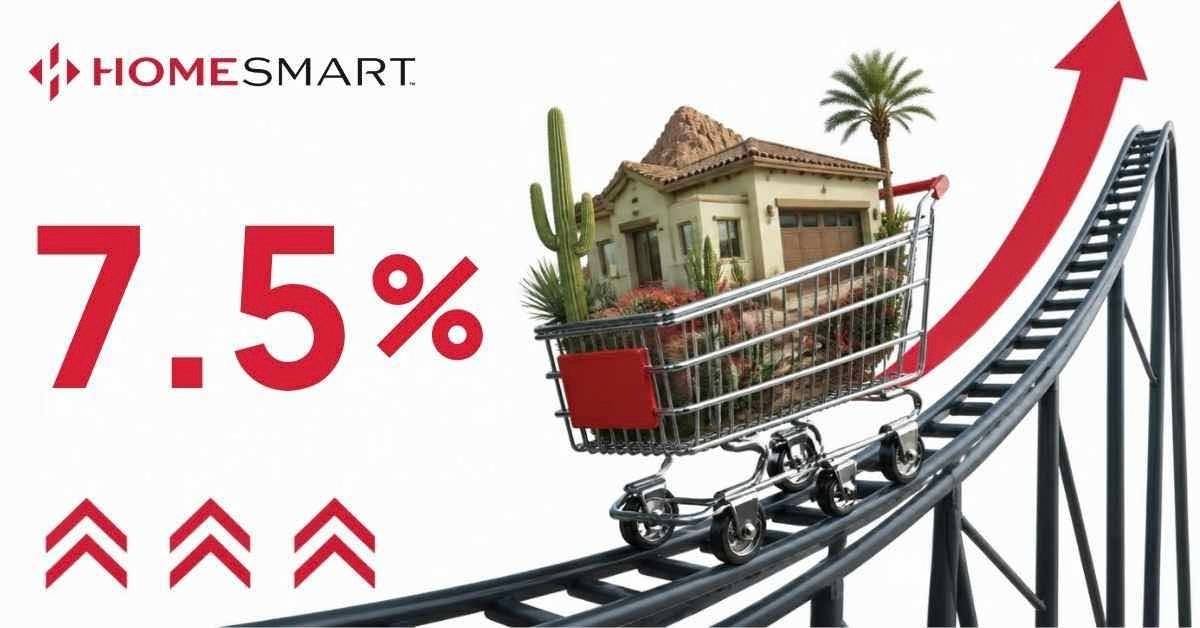
Rates are rising because inflation is still too high, the economy is running strong, and the government is borrowing a lot of money. Those three things push up the cost of borrowing across the board, and mortgages feel it quickly.
Let's break that down without the finance-class headache.
What did the Federal Reserve just do?
On September 16, the Federal Reserve raised its key interest rate by one quarter of a percent. The Fed is basically the country's thermostat for borrowing costs. This was its first increase since 2023, and it brought the top of its target range back up to 4%.
Most Fed members expect one more quarter-point bump before the end of the year. So this may not be the last change we see.
A quick clarification that surprises people: the Fed doesn't directly set mortgage rates. But its moves send a strong signal, and lenders listen.
Why is inflation such a big deal here?

Inflation simply means prices going up over time. In August, inflation was running at 3.4% compared to a year earlier. The Fed's goal is 2%. When prices keep rising faster than that, the Fed tends to make borrowing more expensive to cool things down.
Think of it like turning down the heat on a pot that's about to boil over.
What's the 10-year Treasury, and why should I care?
The 10-year Treasury is a type of government bond. A bond is basically an IOU where investors lend money to the government and get paid interest. Mortgage rates tend to follow the 10-year Treasury pretty closely, like a little brother copying his big sister.
On September 15, that Treasury yield reached 5%, the highest in about 20 years. Higher inflation, heavy government debt, a big wave of business investment in AI, and global uncertainty all helped push it there. When that number climbs, mortgage rates usually climb with it.
How much does a higher rate change my monthly payment?
A higher rate can add hundreds of dollars to your monthly payment, depending on your loan size. Even a half-point jump matters. National estimates show going from 6.5% to 7% adds more than $125 a month on a median-priced home in the U.S.
Scottsdale-area prices tend to run higher than the national middle, so the jump can feel bigger here. Let me show you with a simple example.
Estimates show principal and interest only on a 30-year fixed loan. Your full payment will also include property taxes, homeowners insurance, and any HOA dues.
These are rough estimates are for principal and interest only on a 30-year fixed loan. (Principal is the money you borrowed. Interest is what the lender charges you to borrow it.)
That's roughly $336 more per month going from 6.5% to 7.5%. Over a year, it adds up to about $4,000. That's a lot of Sunday brunches in Old Town.
Keep in mind your full payment will also include property taxes, homeowners insurance, and possibly HOA dues. Lots of Scottsdale and North Phoenix communities have them, so it's smart to factor that number in from day one.
What does "rate-proofing" my budget mean?

Rate-proofing means planning a monthly payment you can live with even if rates rise or fall by up to 1%. Recent research using 26 years of mortgage history found buyers should expect rates to swing about 0.5% to 1% in either direction within 3 to 12 months.
In other words, don't build your whole plan around the hope that rates will drop next month. They might. They might not. Nobody has a crystal ball, not even the folks on TV who sound very sure of themselves.
How big of a cushion should I keep?
That same research suggested setting aside about $130 a month as a buffer, based on today's national median home price and current rates. That extra room helps absorb a rate change without wrecking your budget.
Here's what it looks like in real life. Say you're comfortable with $2,000 a month for principal and interest. That payment buys you roughly:
• At 6.5%: about a $316,000 loan
• At 7.0%: about a $301,000 loan
• At 7.5%: about a $286,000 loan
Same monthly payment, but a one-point swing changes your loan amount by about $30,000. That's the whole reason a cushion matters.
Rate-Ready Plan: 5 steps for buyers this fall
This Rate-Ready Plan is a simple five-step checklist to help Scottsdale home buyers stay calm and in control when rates are bouncing around. It focuses on the payment you're comfortable with, not on guessing where rates go next.
1. Pick your "sleep at night" payment first. Decide the total monthly amount you're truly okay with. Include taxes, insurance, and HOA dues. Then shop from that number, not from the top of what a lender approves.
2. Build in a buffer. Leave room of at least $130 a month, and more if you can. In our desert climate, summer electric bills and pool care can surprise first-year homeowners, so a little extra breathing room goes a long way.
3. Get fully pre-approved, not just pre-qualified. A pre-approval means a lender has actually checked your income, credit, and savings. It shows sellers you're serious, and it makes your offer stronger.
4. Ask your lender about a rate lock. A rate lock is a promise from your lender to hold a certain interest rate for a set number of days while you finish buying. When rates are jumpy, that peace of mind can be worth a lot.
5. Talk about ways to lower your rate. Ask about options like seller credits, where the seller helps pay some of your costs. Sometimes that money can "buy down" your rate. In a slower market, sellers are often more open to these conversations.
Is this fall a good time to buy a home in Scottsdale?

For buyers who are financially ready, this fall may offer more choices and more negotiating room than we've seen in a while. Higher rates are keeping some shoppers on the sidelines, which means less competition for the buyers who move forward.
The national numbers back that up:
• About 1.14 million homes were actively listed for sale across the U.S. at the end of August, up about 4% from a year earlier.
• Existing-home sales (homes that were lived in before, not brand-new builds) ran at a yearly pace of about 3.98 million in August. That's a bit slower than earlier in the summer.
• New-home sales actually ticked up in August compared to July, so builders are still finding buyers.
More homes plus fewer shoppers usually means prices rise more slowly. It can also mean sellers are more willing to negotiate on price, repairs, or closing costs.
Here in the Valley, there's another twist. Fall is when our weather finally cools off and seasonal residents start heading back. Showings tend to pick up as it gets comfortable to tour homes again without melting on the driveway. If you're shopping now, you may get a head start before winter traffic builds.
What should Scottsdale home sellers do when mortgage rates are high?
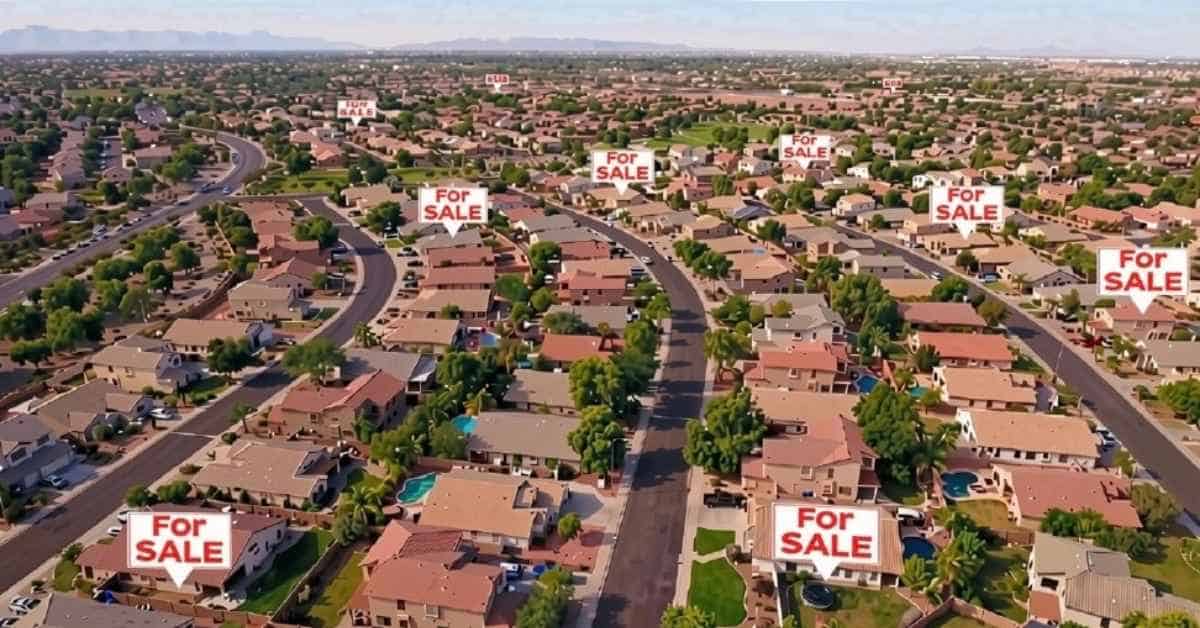
Sellers should price realistically from day one, make the home show well, and stay open to offering buyer incentives. With more homes for sale and buyers watching every dollar, homes that feel priced right and move-in ready get the most attention. Even with a slowing market, the "cream of the crop" homes can get multiple offers.
Here's what I'm telling my sellers right now:
• Price for today's market, not last spring's. Buyers are working with tighter budgets. A home priced too high can sit, and a home that sits often ends up selling for less.
• Think about offering help with the rate. A seller credit toward a rate buydown can make your home more affordable to more buyers. Sometimes that works better than a straight price cut.
• Fix the small stuff. Leaky faucets, tired paint, and a struggling AC unit stand out more when buyers have lots of options. In Arizona, a well-maintained cooling system is a big deal to buyers.
• Show off the lifestyle. Outdoor living spaces, mountain views, shade, and low-maintenance desert landscaping all matter here. Make sure your photos and showings highlight them. I'll take care of that!
If you're not sure what your home would sell for today, a quick home value check is a smart first step. It gives you a starting point before you make any big decisions.
Will mortgage rates go back down soon?

No one can say for sure, and it's risky to plan your purchase around a future drop. Some experts now say buyers should get used to rates around 7% as the "new normal" while inflation and long-term borrowing costs stay high.
The Fed has signaled it may raise its rate again before year's end. Inflation is still above target. Government borrowing isn't slowing down. All of that points to rates staying elevated for a while, though they could still bounce up or down along the way.
My honest take? Buy when it fits your life and your budget. If rates do come down later, many homeowners choose to refinance, which means replacing your current loan with a new one at a lower rate. You can't go back and renegotiate the price you paid for a house. But you may be able to change your rate down the road.
By the Numbers: Fall 2026 Mortgage and Housing Snapshot
• 7.58%: Average 30-year fixed rate on September 29, 2026 (Mortgage News Daily)
• 7.03%: Freddie Mac weekly average as of September 24, 2026
• 6.30%: Freddie Mac weekly average one year earlier
• 0.25%: Size of the Federal Reserve's September 16 rate increase
• 3.4%: Yearly inflation rate in August 2026 (the Fed's target is 2%)
• 5%: 10-year Treasury yield on September 15, a two-decade high
• 1.14 million: Active U.S. home listings at the end of August
• 4%: Year-over-year growth in active listings
• 3.98 million: Yearly pace of existing-home sales in August
• $130: Suggested monthly budget buffer to handle rate swings
The Bottom Line
Rising rates are real, and I won't pretend they don't sting. But this market isn't a wall. It's more like a speed bump. Buyers who plan around a comfortable payment and keep a cushion can take advantage of more choices and less competition. Sellers who price smart and meet buyers halfway can still get their homes sold.
Buying or selling a home is a big, emotional step. It's okay to feel unsure. You don't have to figure it out alone, and you don't have to time the market perfectly. You just need a plan that fits you.
If you want to run the numbers together or talk through your options, I'm always happy to chat.
Frequently Asked Questions
What is the average mortgage rate in Scottsdale right now? Mortgage rates are set nationally, so Scottsdale home buyers see about the same rates as the rest of the country. As of late September 2026, the average 30-year fixed rate was around 7.5%. Your personal rate depends on your credit, down payment, and loan type.
How much should I budget for rate changes when buying a home? Research suggests keeping about $130 a month as a buffer, based on today's national median home price. That helps cover a rate swing of 0.5% to 1%, which is common within a year.
Should I wait for mortgage rates to drop before buying? Waiting is a gamble. Rates could go down, but they could also go up, and home prices may rise too. It's usually smarter to buy when the monthly payment fits your budget, then refinance later if rates fall.
Is it a buyer's market in Scottsdale this fall? Nationally, more homes are for sale and fewer buyers are shopping, which gives prepared buyers more negotiating room. Conditions vary by neighborhood and price range, so it helps to look at local numbers for the areas you're considering.
What is a mortgage rate lock? A rate lock is a lender's promise to hold your interest rate for a set time, often 30 to 60 days, while you finish buying. It protects you if rates rise before closing.
Judy Orr, Realtor® HomeSmart | ADRE #SA689963000 Serving Scottsdale, Cave Creek, Carefree, and North Phoenix
480-906-1500 | ✉️ judyorr@judyorr.com Curious what your home is worth? Try the free home evaluation.
Enjoy this blog post? Click here to subscribe for updates
Leave A Comment