

No Partner, No Problem: Single Women Are Buying Homes at Record Rates
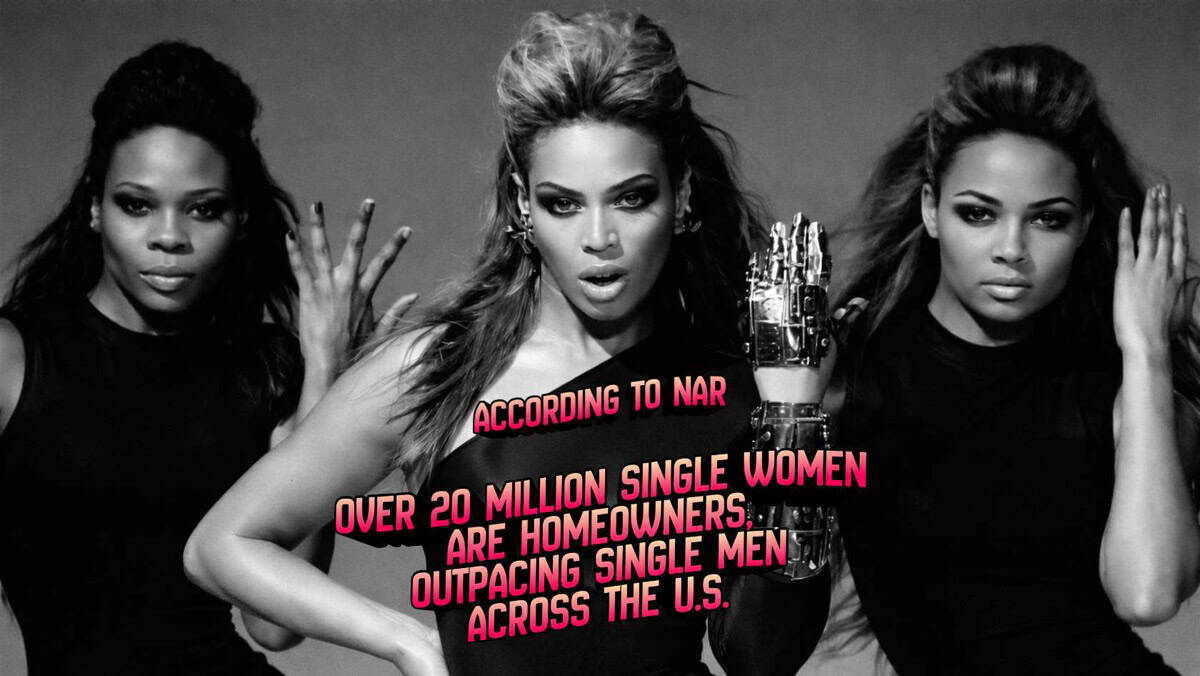
The face of today's typical homebuyer might surprise you. For a long time, the idea of buying a house was wrapped up in this very specific picture: a couple, probably married, pooling two incomes together to afford a down payment and split a mortgage. That image has been plastered across real estate ads and financial advice columns for generations. But real life in 2024 looks a lot different, and the actual data on who's buying homes right now tells a story that almost nobody saw coming.
I have to go back to around 1985. I was getting divorced and wanted to get my own place. I was told by multiple people (all men) that no one would give a mortgage to a single woman. I proved them wrong! I love working with single women when they're buying their first place on their own. And today's women aren't being told what I was when I bought my first place as a single female.
And now, single women are buying homes at a rate that now outpaces single men, and not by a small margin. This isn't a blip or a one-year anomaly. It's a genuine, measurable shift in who's participating in the housing market and what motivates them to get there. If you're someone who's been quietly wondering whether homeownership is even realistic without a partner's income backing you up, this trend is basically a real-world answer to that question. And the answer is yes, it absolutely is.
The Numbers Tell a Pretty Compelling Story
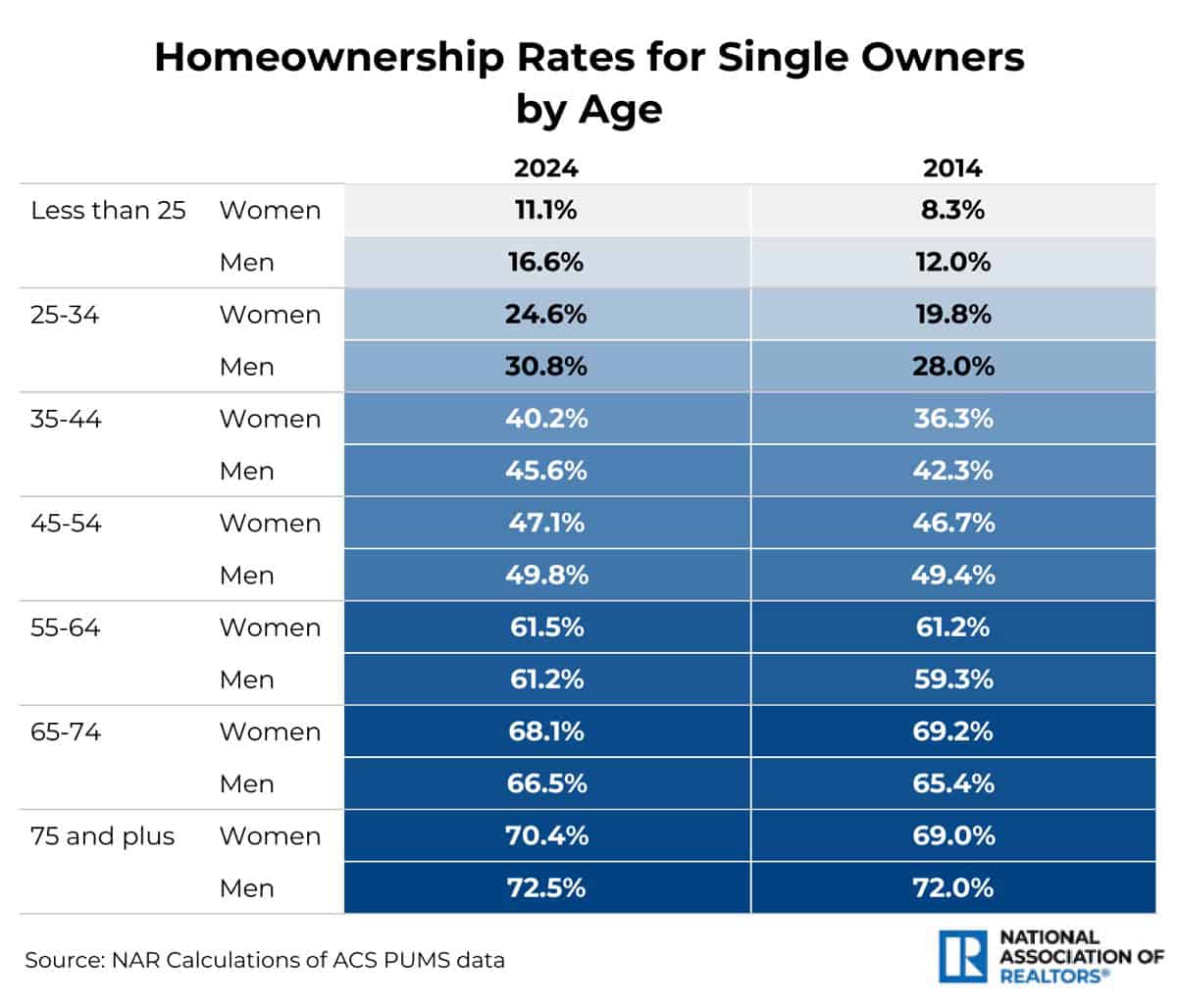
According to data from the National Association of Realtors, single women now make up a larger slice of the homebuyer pie than single men do, and they've been holding that position consistently. Right now, about 51% of single women own homes compared to just under 50% of single men. That might sound like a small gap, but when you translate those percentages into actual people, the difference becomes significant: more than 20 million single women own homes today compared to roughly 14 million single men. That's a gap of around 6 million people.
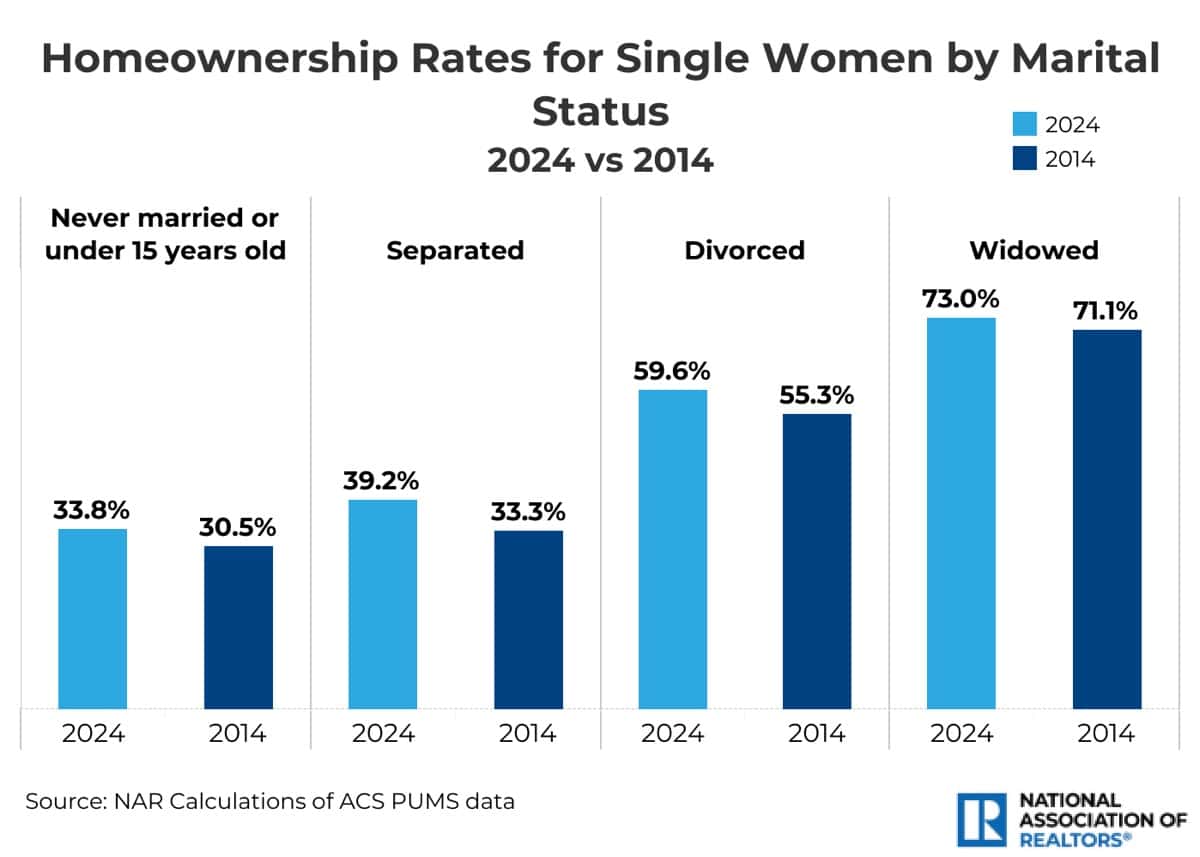
What's even more interesting is what's driving this. It's not one particular type of single woman fueling the trend. It's happening across multiple groups at once. Women who have gone through a divorce are buying homes at higher rates than before, with that figure climbing from 55% to 60%. Separated women have seen their homeownership rate jump from 33% to 39%. Women who have never married are also getting into the market more than they used to, moving from 30% to 34%. And then there's the widowed homeowner group, which sits at about a 73% ownership rate, with an average tenure in their homes of 18 years and a median age of 63. These women aren't just buying. They're staying and building serious long-term equity in the process.
When you add all of these groups together, you get a picture of a large, stable, and growing population of homeowners who are consistently showing up in the market across different life circumstances and age groups.
Making It Work on a Single Income

Here's where it gets really interesting, and honestly kind of inspiring. Buying a home by yourself in today's market is genuinely hard. Mortgage rates have been elevated, home prices in many areas remain high, and doing all of that without a second income to lean on requires real strategic thinking. Single women are navigating this despite earning less on average than single men, and they're making it work.
The median income for a single woman homeowner is around $58,000 a year. For single men, that number is closer to $69,000. That's an $11,000 annual difference, which is not nothing when you're trying to save for a down payment and qualify for a mortgage. Because of that income gap, single women tend to put about 30% of their monthly take-home pay toward housing costs, while single men typically spend around 26%. That's a noticeably tighter budget, and it means these buyers are having to be more intentional and more patient in how they approach the whole process.
But here's the thing about stretching your budget a little more for housing: it often comes with a longer time horizon and a stronger commitment to staying put. And staying put is actually one of the biggest secrets to building wealth through real estate. A home you live in for five years and then sell isn't going to do nearly as much for your financial future as one you hold onto for a decade or more. Price appreciation compounds over time, and so does the progress you make paying down your loan balance.
That's exactly what the data reflects. Only 51% of single women homeowners currently carry a mortgage, compared to 54% of single men. That gap suggests women are, on average, further along in paying off their homes, which translates directly into more equity and more financial security.
Why This Matters for Anyone Thinking About Buying
If you've been putting off the idea of buying a place because you assumed you'd need to wait until you had a partner or a higher salary, these trends deserve your attention. Real people are making homeownership happen at income levels that a lot of folks assume aren't enough, and they're building genuine wealth by doing it.
The mindset shift that seems to separate successful solo buyers from people who stay on the sidelines forever is pretty straightforward. It's less about waiting for the perfect financial moment and more about playing a long game with a clear plan. Buying at a reasonable price for what you can actually afford, budgeting seriously for your housing costs even if it means cutting back elsewhere, and then committing to staying long enough for the investment to mature. That's the formula.
The 30% housing budget figure is worth taking seriously. It's a commonly cited threshold in personal finance, and the real-world data backs it up as a workable approach even for single-income buyers. It requires discipline, definitely, but it's not an impossible standard to meet. Plenty of people are already living proof that it works.
The equity piece is the part that tends to get underestimated by first-time buyers who are focused entirely on the monthly payment. When you own a home and values rise over time, which they historically do in most markets over long enough periods, that increase in value is yours. You're not sharing it with a landlord. You're not losing it when you move out. It follows you in the form of cash you can access when you eventually sell or refinance. The single women who have been in their homes for an average of 18 years have accumulated a meaningful amount of that kind of wealth, and it's fundamentally changed their financial positions.
What This Means if You're Already a Homeowner Thinking About Selling
This demographic trend matters on the seller side, too. Single women represent a large, motivated, and serious pool of buyers who tend to prioritize stability and long-term value. They're not typically impulse buyers or speculators. They're looking for a home they can genuinely settle into and build a life around. Understanding who's actually out there searching in your price range can help you think more strategically about how to present your property and what features are likely to resonate.
A home that feels safe, is well-maintained, and is in a neighborhood with convenient access to daily needs is going to appeal strongly to this group. These aren't complicated preferences, but knowing your likely buyer makes the whole process feel a lot more focused.
The Bigger Picture
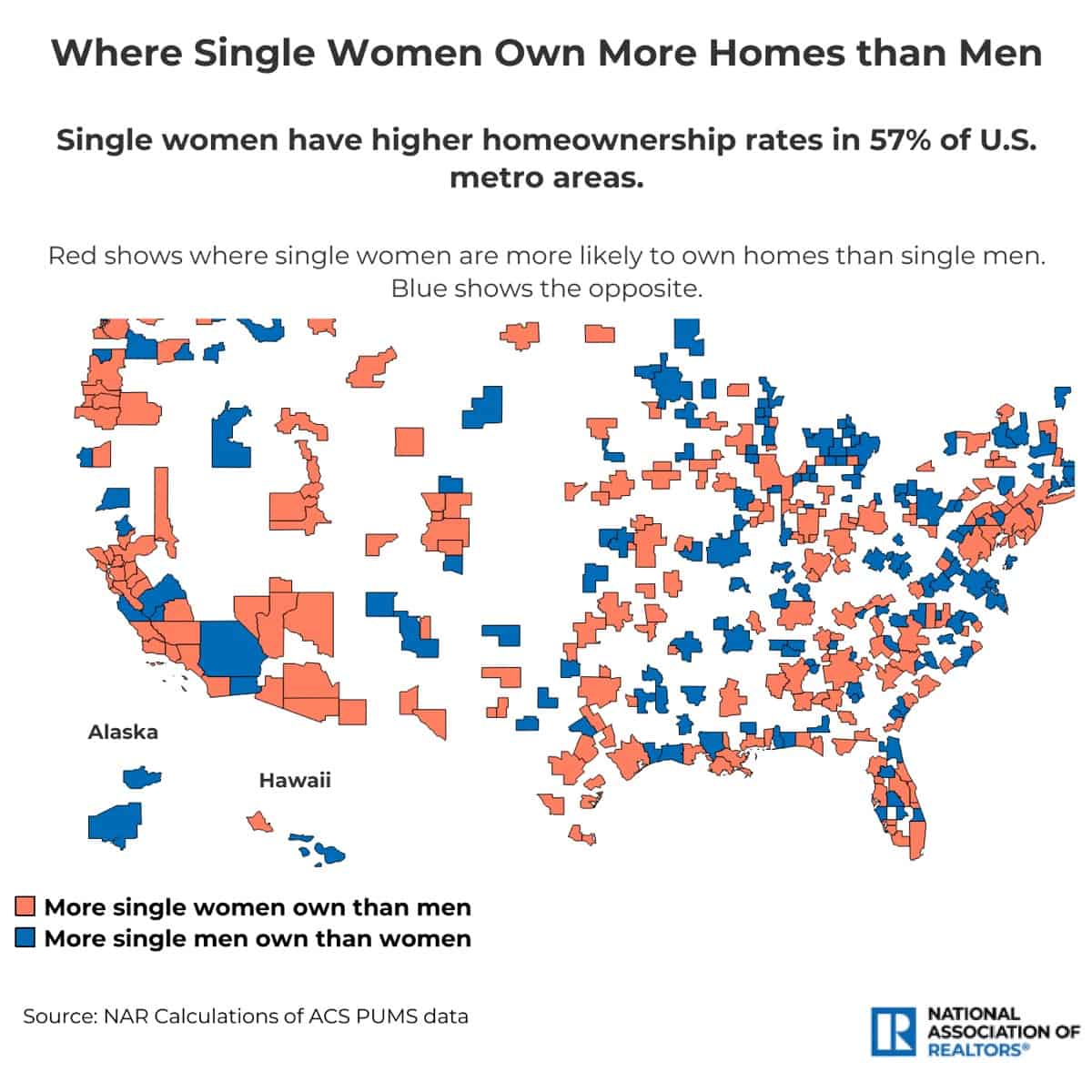
For a long time, people pictured homeownership in a pretty predictable way. Usually, it meant a married couple, two incomes, and a traditional path to buying a house. But the real estate market doesn’t look like that anymore. One of the biggest shifts happening right now is that more people are buying homes on their own, and single women are leading that movement in a major way.
What this data ultimately points to is that the path to homeownership is more accessible and more varied than the traditional narrative has ever given people credit for. You don't need a dual-income household to get there. You don't need to wait for your life to look a certain way. What you do need is a realistic budget, a willingness to prioritize housing in your spending, and the patience to let time do a lot of the heavy lifting for you.
If you’re hoping to buy your first home, there’s a real lesson in that. Start with what you can control. Build your savings. Know your monthly comfort zone. Think long term. And don’t count yourself out just because you’re doing it on your own. Plenty of people already are, and many of them are doing it successfully.
That’s the bigger story here. This is not just about one group beating another in a statistic. It’s about a shift in confidence, opportunity, and financial independence. More single women are claiming space in the housing market, and in doing so, they’re changing what homeownership looks like for everyone.
Single women across the country figured this out, and the numbers show it. Whether you're just starting to seriously think about buying your first place or you've been on the fence for a while, let their collective experience be the nudge you needed. The front door you've been thinking about? It doesn't require a co-signer to make it yours.
Posted by Judy Orr onEnjoy this blog post? Click here to subscribe for updates
Leave A Comment