
Where Architecture Meets the Desert: Discovering Taliesin West

You know how some buildings just sit on top of the land? Then there are the rare places that look like they actually grew right out of it.
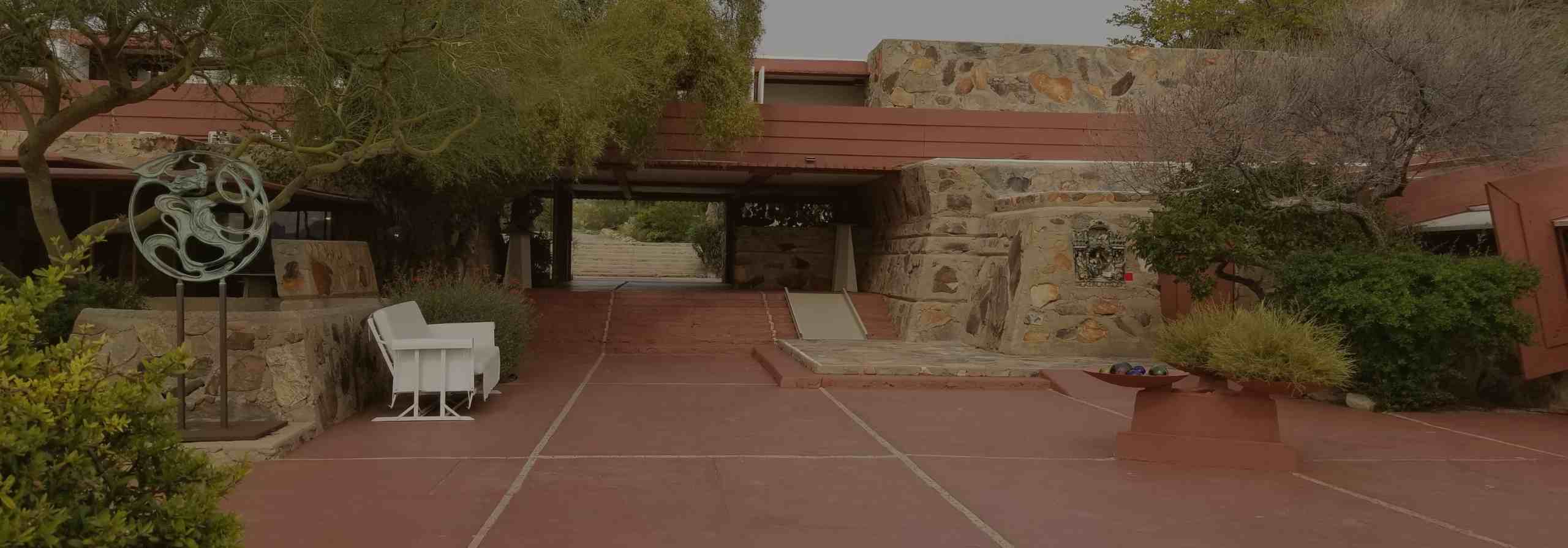
Set against the rugged backdrop of the McDowell Mountains in Scottsdale, Taliesin West feels less like a standard building and more like a quiet conversation between architecture and the desert. Sunlight slides across angled walls. The wind moves through open courtyards. Rough desert stones turn golden at sunset. Everything about the compound suggests that it belongs exactly where it stands.
This was Frank Lloyd Wright’s goal from the start. When he arrived in Arizona in the late 1930s, he wasn’t looking to force his architecture onto the landscape. He wanted to work with it.
Today, Taliesin West remains one of the most personal and revealing spots in American architecture.
A Winter Camp That Became an Architectural Icon
In 1937, Frank Lloyd Wright and his apprentices left Wisconsin and headed west, chasing warmer weather. Wright was already in his seventies—an age when most people slow down—but he was still designing some of the most important buildings of his career.
Arizona appealed to him immediately. The desert was open, raw, and full of color. Wright bought land at the base of the mountains and began building what he called a "winter camp" for his architectural fellowship.
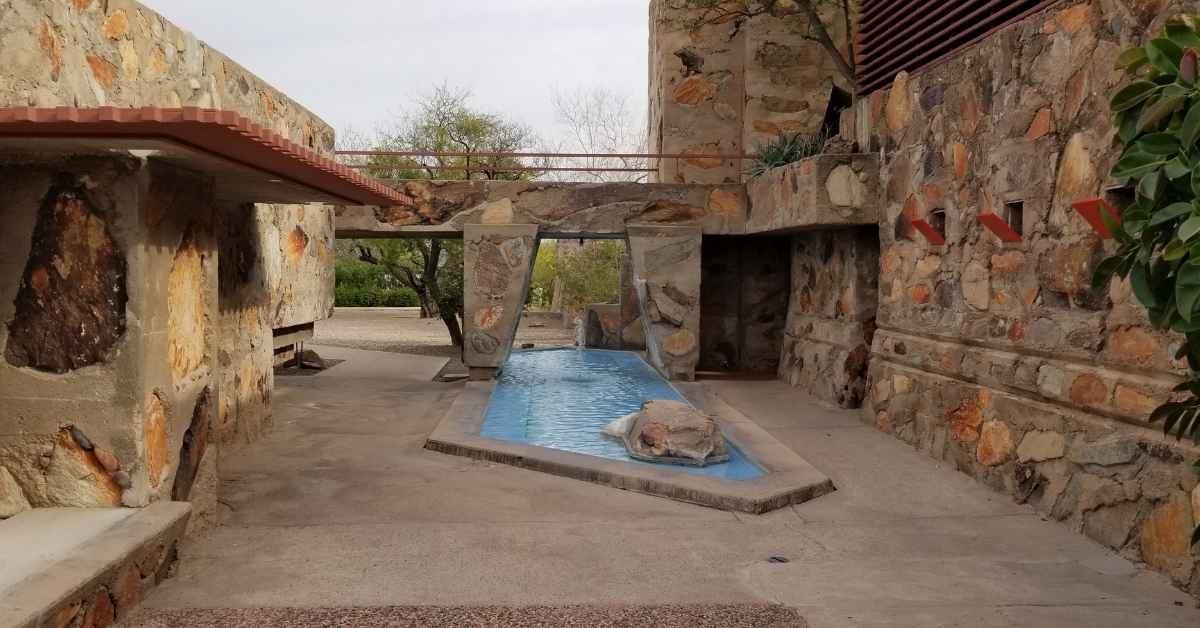
The first structures were simple. Apprentices gathered rocks from the desert floor and set them into wooden forms, creating what Wright called “desert masonry.” They stretched canvas roofs across redwood beams to filter out the intense sun.
Over the years, the compound grew naturally. Studios were added. Living quarters popped up. Garden courtyards formed in the spaces between buildings. Wright designed it as a working laboratory where architecture could evolve in real time.
Taliesin West soon became the winter headquarters for Wright’s practice and the home of the Taliesin Fellowship, his immersive school for young architects.
Organic Architecture in the Desert
Frank Lloyd Wright believed buildings should be rooted in their environment. He called this philosophy "organic architecture."
At Taliesin West, that idea is easy to understand.
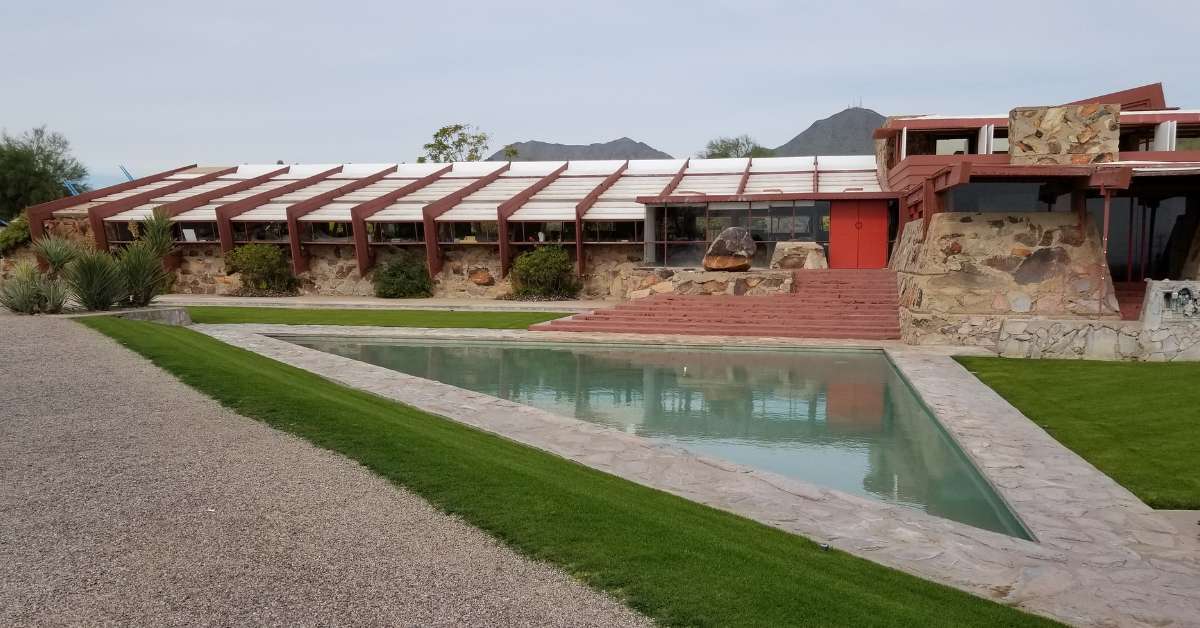
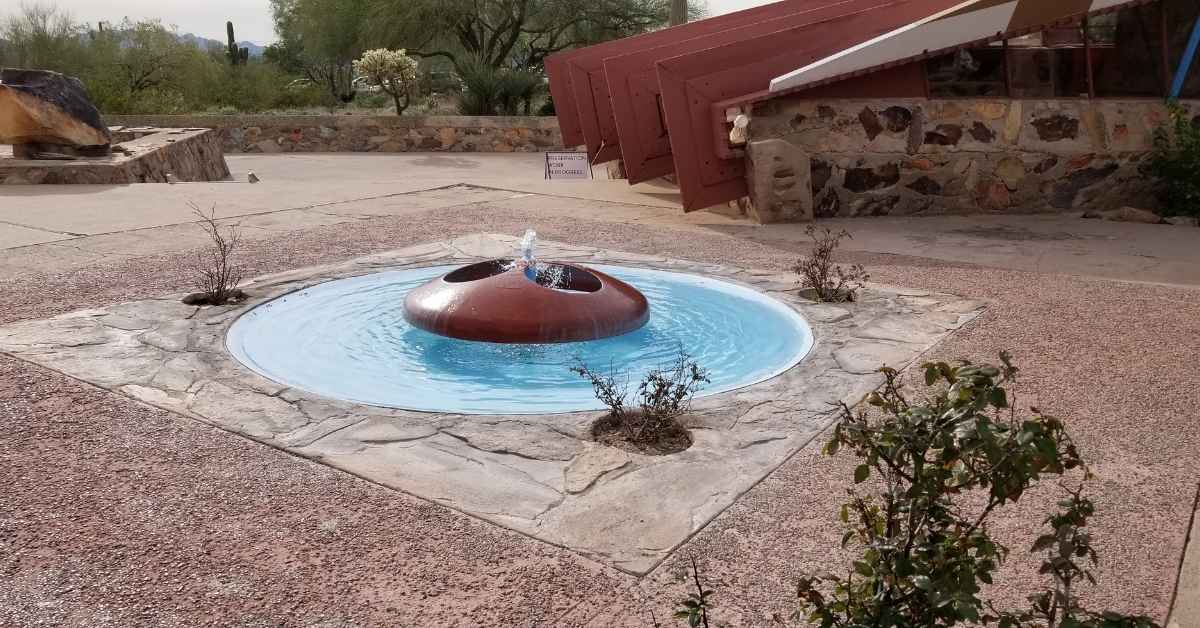
The walls are built from stones gathered right there on the property. They’re held together with concrete, creating a rough texture that mirrors the terrain. From a distance, the structures almost disappear into the landscape.
The roofs are another signature feature. Wright used low, sloping planes covered with translucent material to soften the harsh desert glare. Instead of shutting the sun out completely, the design lets light glow gently through the rooms.
Geometry plays a huge role here, too. You’ll see triangles everywhere—in the roof structures, the windows, and the floor patterns. Wright believed triangles fit the desert best because they echoed the jagged shapes of the mountains and rocks.
The result is architecture that feels both intentional and totally natural.
A School, Studio, and Way of Life
Taliesin West was never meant to be just a house or an office. It was a community.
Wright’s apprentices lived and studied right on the property. They didn't just draw blueprints; they helped design and build many of the structures themselves. Their education went way beyond drafting tables. Students cooked meals, farmed, played music, and debated art and philosophy.
Architecture was treated as part of a broader creative life.
Many of Wright’s most famous later works were designed while he was living at Taliesin West, including the Guggenheim Museum in New York and the Marin County Civic Center in California.
The site functioned as both a lab and a classroom. Ideas were tested with real materials under real desert conditions.
That spirit is still alive today. Taliesin West is home to the Frank Lloyd Wright Foundation and remains connected to an architecture school that carries on Wright’s way of teaching.
Walking Through Taliesin West Today
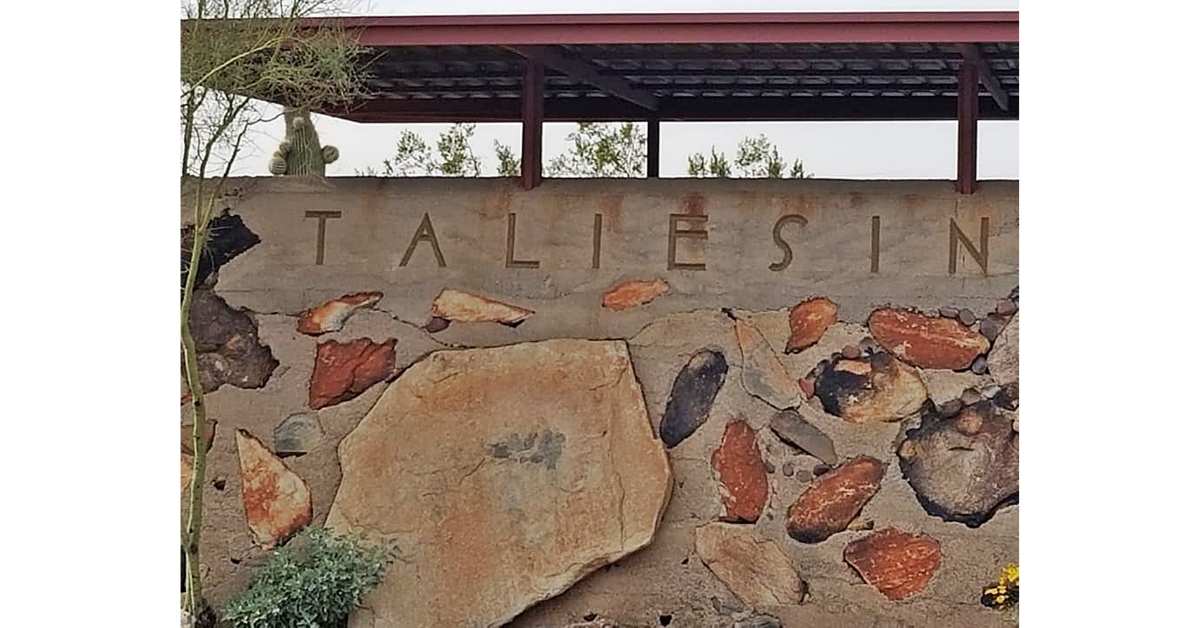
Visiting Taliesin West isn't like touring a stuffy museum; it’s more like stepping inside Wright’s creative brain.
Paths wind through courtyards framed by desert plants. Walls tilt at subtle angles. Windows frame views of the mountains that look like they were composed like a painting.
And the light—it changes everything.
Morning light washes softly across the stone walls. By midday, the bright Arizona sun creates sharp, dramatic shadows along the triangular roofs. In the late afternoon, the walls turn warm and almost copper-colored.
There is also a surprising quiet here. Even though Scottsdale has built up around it, the property still feels tucked away in the landscape.
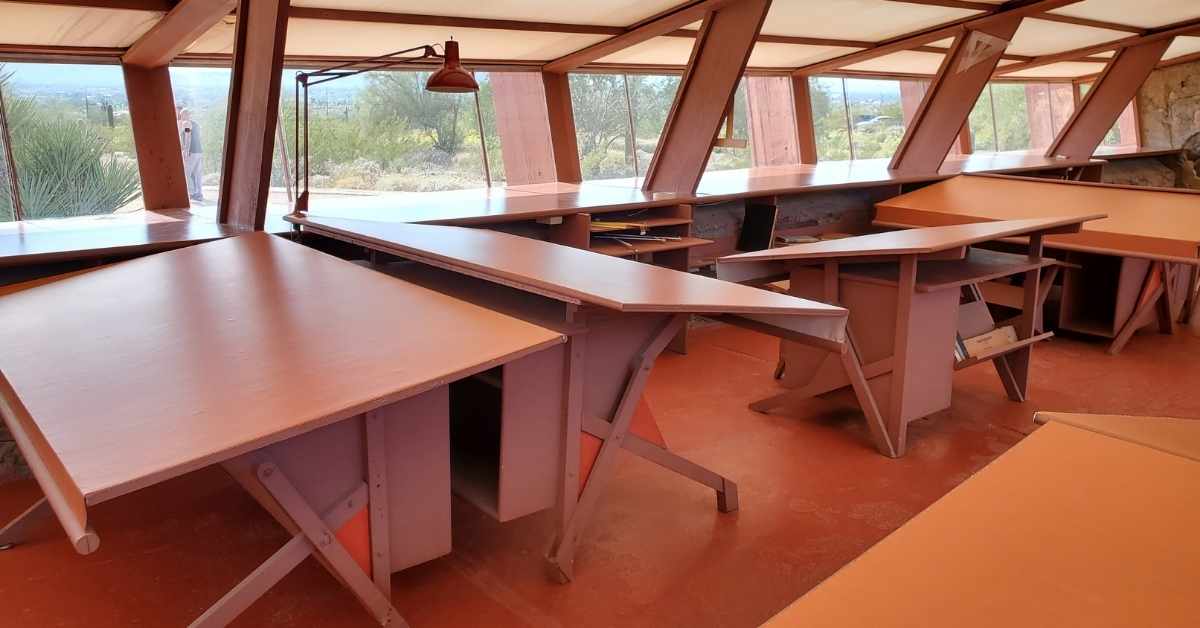
Inside the drafting studio, where Wright once worked, long tables stretch beneath the soft light of the roof panels. You can almost picture the room filled with apprentices sketching late into the night.
Small details show you who Wright was. A simple red chair he loved. A piano used for evening concerts. Outdoor spaces designed just for hanging out and talking.
It feels lived in. Because it was.
Why Taliesin West Still Matters
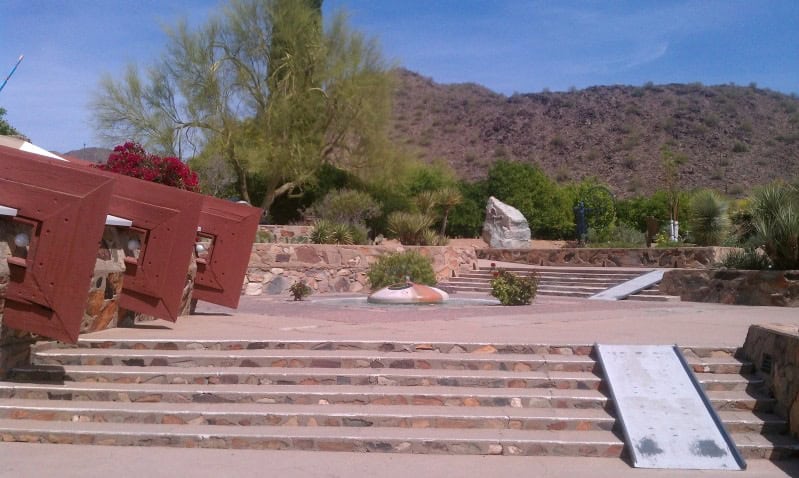
Taliesin West is more than just a landmark. It’s a reminder of how buildings can actually respond to the places they sit.
In an era where developers often bulldoze the landscape to fit a generic box, Wright’s desert compound offers a different perspective. It shows what happens when architecture actually listens to its surroundings.
More than eighty years after construction began, Taliesin West still feels experimental and fresh.
The Architect Who Found His Desert Vision
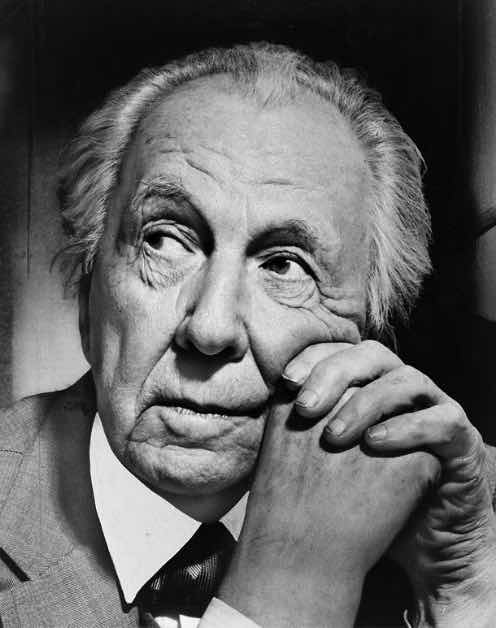
Frank Lloyd Wright’s life reads like a novel that’s too crazy to be fiction. Here was an architect who didn’t hit his creative peak until most people are thinking about retirement, whose personal life was full of scandal and tragedy, and who ultimately found his greatest inspiration in the harsh beauty of the Arizona desert.
Wright’s path to fame was anything but normal. While many artists burn bright and fade young, Wright seemed to gain momentum with every decade. Sure, he made his mark early with his Prairie School houses, but his absolute masterpieces—like Fallingwater and the Guggenheim—didn't happen until he was in his seventies and eighties. It’s like he needed a lifetime of experience, heartbreak, and hard-won wisdom before he could fully pull off his vision. And his personal life definitely gave him plenty of material.
Wright’s Remarkably Unconventional Life
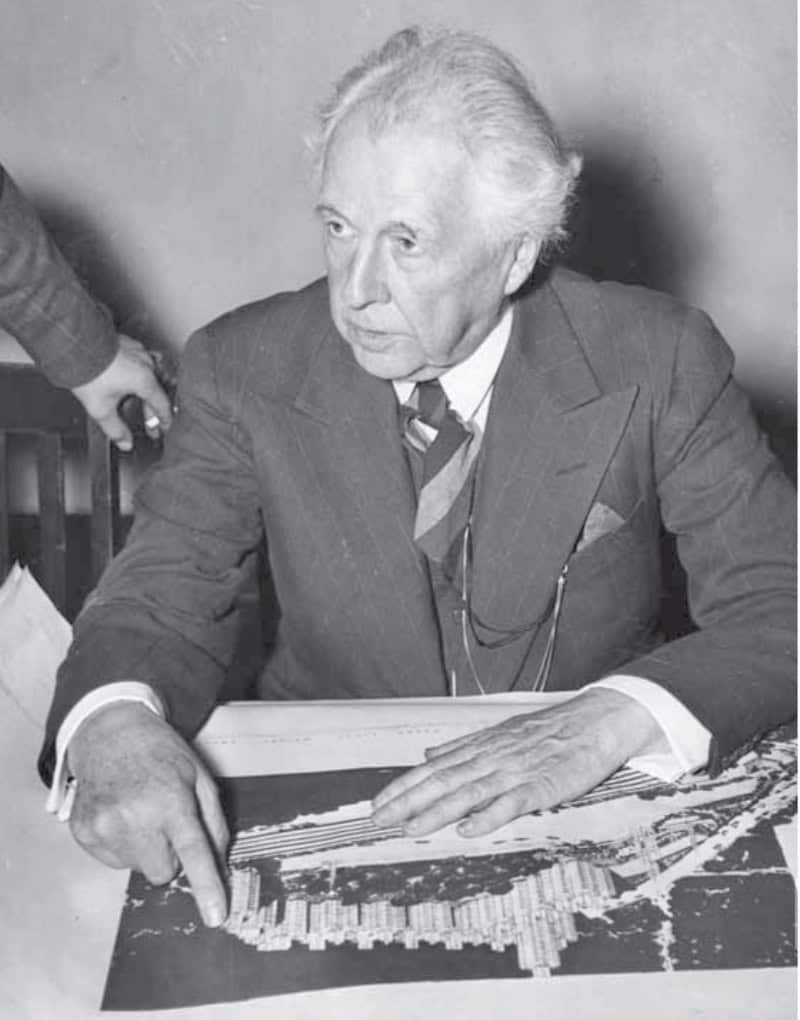 Wright’s first marriage to Catherine Tobin in 1889 looked normal enough on the surface. They had six kids and settled into a stable life in Oak Park, Illinois. But Wright wasn't built for "normal." In 1909, he shocked Chicago society by leaving his family to run off to Europe with Mamah Borthwick Cheney, the wife of a former client. The scandal nearly tanked his career.
When Wright and Mamah came back to the States, they retreated to the hills of Wisconsin, where Wright built his first Taliesin. The name means "shining brow" in Welsh, and Wright placed the house to crown a hilltop. For a few years, it seemed like he had found peace.
Then came August 15, 1914—a day Wright never got over. While he was away on business, a mentally unstable servant set fire to the house and murdered seven people with an axe, including Mamah and her two children. The tragedy shattered Wright. He rebuilt Taliesin, but the shadow of that day never really left.
His third marriage, to Olgivanna Hinzenberg in 1928, finally brought some stability to his chaotic world. Olgivanna was a force of nature herself. She brought discipline and spiritual focus to Wright’s life, and she was sharp with business, helping to launch the Taliesin Fellowship, where apprentices paid to learn while maintaining the estate.
From Wisconsin Winters to Arizona Sun
Even with Olgivanna helping, Wright’s health started to slip as he entered his seventies. The Wisconsin winters that used to energize him were now draining him. In 1936, a bad bout of pneumonia almost killed him. His doctor didn't sugarcoat it: another Wisconsin winter might be his last.
Wright had always been drawn to the Southwest. He’d visited Arizona and loved the stark beauty and how indigenous architecture seemed to grow right out of the dirt. Faced with choosing between his health and his beloved Taliesin, Wright did what he always did—he chose both. If he needed warmth, he’d build a winter retreat just as revolutionary as his summer home.
In 1937, at age seventy, Frank Lloyd Wright loaded up a caravan of cars with apprentices, supplies, and even Olgivanna’s grand piano, and headed for the Sonoran Desert. What happened next became one of the most legendary chapters in American architecture.
The Caravan of Red Cars That Headed West
When Wright decided to head to Arizona, he didn't just hop on a train. True to his style, he made an entrance.
Wright and his Fellowship packed up in Wisconsin and formed a convoy of cars for the long drive. They traveled hundreds of miles together, heading toward the open land near the McDowell Mountains. Photos from back then show the caravan moving across the landscape—a rolling migration of architects, students, and big ideas.
There was one detail that was pure Wright.
The cars were almost always red.
Wright was obsessed with a specific, earthy red—often called Cherokee red. He used it on everything: furniture, building accents, even his stationery. He believed red had vitality; he once said it was the "color of creation."
So when the group set out for Arizona, many of their cars were painted that specific shade. That line of red cars crossing the dusty landscape was a perfect symbol for what they were doing. They were leaving the cold behind and carrying Wright’s vision into a totally new world.
When they finally arrived north of Scottsdale, they started building immediately. Apprentices had to gather stones, build walls, and even construct their own places to sleep.
That road trip set the tone. Taliesin West wasn't just a destination; it was a seasonal migration and a shared adventure between Wright and his students.
Life Under Canvas: The Apprentice Experience
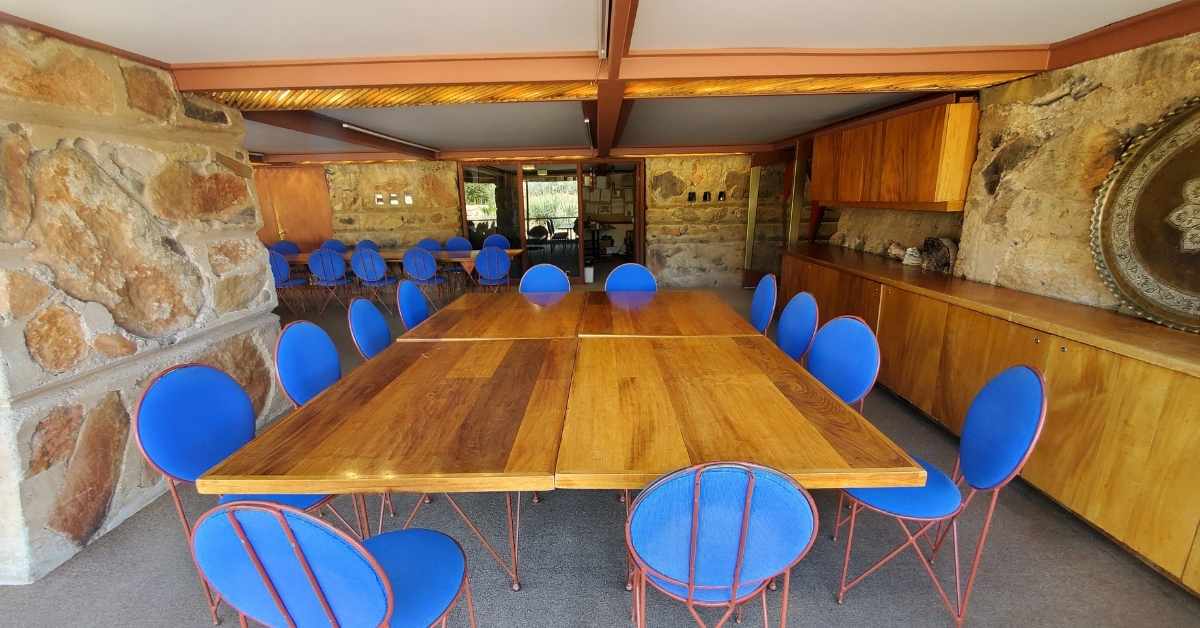
A section of the community dining room where residents ate meals
While Wright and Olgivanna moved into the main quarters, the apprentices had a very different reality. There were no dorms waiting for them. No cozy rooms with running water. Instead, Wright’s students had to build their own shelter in one of the toughest landscapes in the country.
The solution was practical, if a bit intense: canvas shelters scattered across the desert floor. These weren't just camping tents, but permanent frames draped in heavy canvas to handle the weather. Each apprentice was responsible for their own little patch of the desert.
The daily routine of tent life became part of the Taliesin West education. Apprentices learned to secure their canvas against sudden dust storms that could turn day into night in minutes. They discovered which rocks made the best anchors and how to create cross-ventilation to survive summer temperatures that regularly soared above 100+ degrees. Winter brought its own challenges, as desert nights could plummet into the thirties, turning the same canvas that provided blessed shade into inadequate protection against the cold.
Water had to be hauled by hand. Privacy? Non-existent. Scorpions, javalinas, and rattlesnakes were just neighbors you had to deal with. Yet, this harsh lifestyle became part of the legend. The young architects weren't just learning to draw; they were learning to live in the landscape Wright cared so much about.
Socially, the tent city had its own hierarchy. Senior apprentices got the prime spots, while newbies often got stuck in the full sun. But in the evenings, everyone gathered around fire pits for design critiques and philosophy talks, with Wright occasionally wandering over to hold court under the stars.
It wasn't just Wright being cheap. The tent life was key to his vision. He wanted a place where architecture came from direct contact with nature, where comfort was earned, and where the desert shaped both the buildings and the people building them.
My Own Walks Through Taliesin West
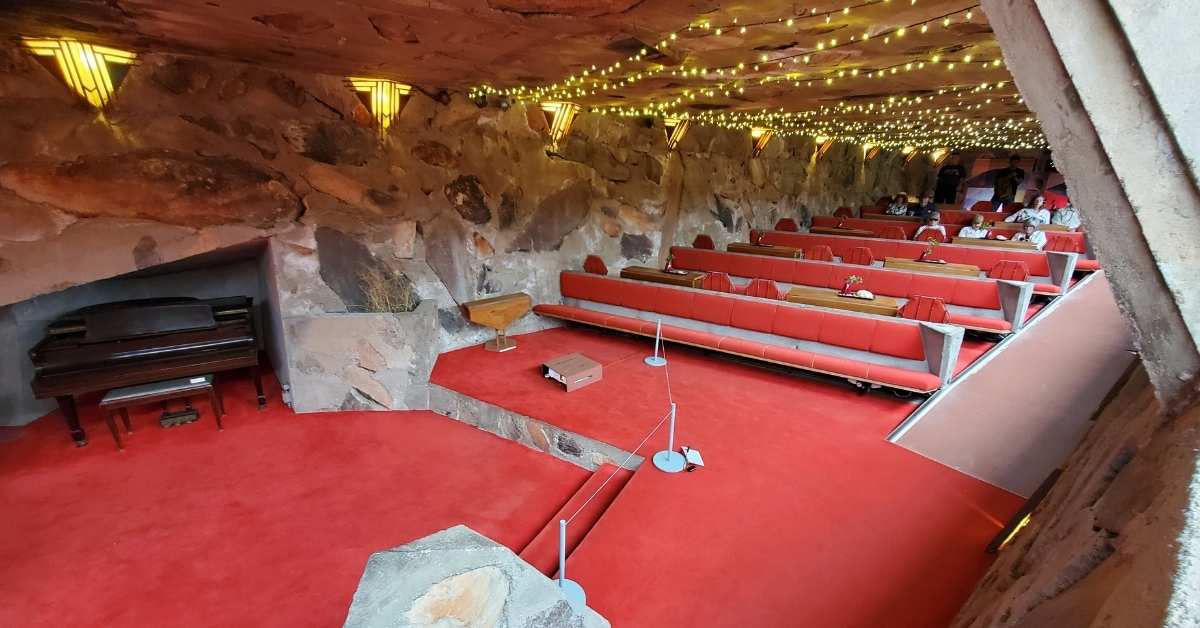
The Cabaret Theater is one of my favorite areas
I recently wrote a newsletter informing my readers of a new art installation currently happening at Taliesin West. I want to begin with how Taliesin West is such a special place to me. To quote my newsletter, "Do you have a place that you love and can visit over and over? That's how I feel about Taliesin West in Scottsdale. I never get tired of it, and every time I go there, I get "the feels.
I've visited Taliesin West many times over the years. My first few visits were led by docents - real people walking you through the history of the compound and the man himself. Every guide had their own spin on the story, which made it fun because you’d get different insights depending on who was leading the group. I even thought of becoming a docent myself once - until the time we went in 100+ degree weather listening to a patient woman carrying a sun umbrella over her head. At least we were provided a bottle of water with our tour.
Covid changed all of that. I wasn't happy when I took my teenage grandson (who actually wanted to go!), and we were given headphones to listen to different recordings at specific locations throughout the compound, not a docent in sight. I was really upset that the huge theater, now called the Music Pavilion, is no longer accessible. If you do a Google search, it states that it is, but it is not. When I asked at that visit, I was told that it is no longer part of the tour because it is still a working theater with paid tickets to different events, including private events. But it was always a working theater, so I'm not sure why it's being closed off on tours.
On my most recent trip, I was saddened that our tour skipped Wright's and his wife's bedrooms and bathroom. I was told it is now part of the "Behind-the-Scenes Tour", which features some areas that have never been open before.
Despite the changes, for anyone visiting Scottsdale, it’s still one of the most meaningful places to see art, design, and the desert collide.
And if you happen to be there near sunset, when the mountains turn purple and those stone walls start to glow, you understand exactly why Wright picked this spot. The desert did not just inspire Taliesin West.
It shaped it.
Posted by Judy Orr onEnjoy this blog post? Click here to subscribe for updates
Leave A Comment